Cholecystectomy — surgical removal of the gallbladder — is one of the most commonly performed operations in the United States. If you are experiencing gallbladder attacks, have been diagnosed with gallstones, or have an abnormal gallbladder on imaging, this guide explains what to expect from consultation through complete recovery.
The gallbladder stores bile produced by the liver and releases it after meals to help digest fats. When the gallbladder becomes diseased — from stones, inflammation, dysfunction, or polyps — it causes pain, nausea, and potentially serious complications. Removing the gallbladder usually prevents future attacks and treats the condition permanently. Most people adapt quickly to digesting without it.
Not all right upper abdominal pain is caused by the gallbladder — acid reflux, gastritis, ulcer disease, and other digestive conditions can produce similar symptoms. That is why the diagnosis is confirmed using your symptoms, exam, imaging, and lab results before recommending surgery.
Gallbladder Problems? Here’s What Happens Next
Call us
Same-day and next-day appointments at our Lawrenceville office. No referral needed unless your insurance requires one. Many patients are referred after an ER visit — we see these patients quickly. Interpretation services available for all languages.
30-minute visit
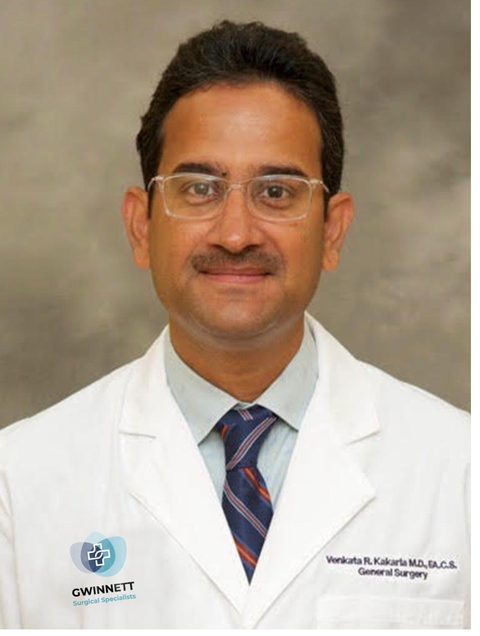
Dr. Kakarla reviews your imaging and symptoms, confirms the diagnosis, and explains the surgical plan. The visit is thorough but efficient.
Scheduled quickly
Surgery is typically scheduled within 1–2 weeks. We verify your insurance and you know your out-of-pocket cost before the procedure.
Recognizing the signs
When Is Gallbladder Surgery Needed?
Brief episodes of pain after meals — especially fatty meals — may reflect biliary colic, a temporary blockage by a gallstone that passes on its own. Constant pain lasting hours, especially with fever or worsening tenderness, raises concern for acute cholecystitis (gallbladder inflammation/infection), which may require urgent treatment.
Surgery is recommended when the gallbladder is causing problems:
- Symptomatic gallstones — recurrent right upper abdominal pain (biliary colic), especially after eating
- Acute cholecystitis — gallbladder inflammation or infection causing persistent pain, fever, and tenderness
- Gallstone pancreatitis — a stone blocking the pancreatic duct, causing pancreas inflammation (often diagnosed in the ER)
- Biliary dyskinesia (gallbladder not squeezing properly) — dysfunction confirmed by a HIDA scan showing abnormal ejection fraction (either too low or too high), even without visible stones. Surgery is usually recommended only after other likely causes of symptoms have been evaluated
- Gallbladder polyps — polyps 10 mm or larger that carry potential for malignancy
For mild, infrequent biliary colic, watchful waiting may be an option — but recurrent attacks and the risk of complications (cholecystitis, pancreatitis) make surgery the more definitive choice for most patients. Dr. Kakarla discusses your options and decides together with you.
When to seek urgent care
Call our office first if you are experiencing worsening symptoms or a new gallbladder attack — we can often evaluate you quickly and guide you on next steps. If you have severe, constant right upper abdominal pain lasting more than a few hours, especially with high fever, chills, vomiting, or yellowing of the skin or eyes (jaundice), go to the emergency room or call 911. These may indicate acute cholecystitis, a bile duct stone, or gallstone pancreatitis.
I had been having pain after meals for months and kept thinking it was just indigestion. After a bad attack sent me to the ER, they found gallstones. I wish I had seen Dr. Kakarla sooner — the surgery was so much easier than I expected.
— Verified Google ReviewGetting answers
How Gallbladder Problems Are Diagnosed
During your consultation, Dr. Kakarla reviews your symptoms, imaging, and blood work. Common diagnostic tests include:
- Abdominal ultrasound — the first-line test for gallstones, showing stones, wall thickening, and fluid around the gallbladder
- Blood tests — liver function tests, complete blood count, lipase (if pancreatitis is suspected)
- HIDA scan — measures gallbladder function (ejection fraction). Used when gallstones are not found but symptoms suggest gallbladder dysfunction
- MRCP (a special MRI scan of the bile ducts) — ordered if there is concern for a stone in the common bile duct
Common Bile Duct Stones
Some patients have stones not just in the gallbladder but in the main bile duct. If jaundice (yellowing of the skin or eyes), pancreatitis, or abnormal liver tests suggest a bile duct stone, a procedure called ERCP — performed by a gastroenterologist — may be needed to remove the stone before or after your gallbladder surgery.
If you are pregnant or may be pregnant, let us know before surgery planning. Gallbladder surgery can be performed during pregnancy when necessary, typically in the second trimester.
Coming after an ER visit? Please bring your ER imaging (ultrasound or CT), blood work results, and discharge summary. Having these at your consultation allows Dr. Kakarla to review your case and schedule surgery quickly.
The procedure
How Gallbladder Surgery Is Performed
Dr. Kakarla performs cholecystectomy using two minimally invasive approaches, both through four small incisions (5–12 mm). The choice of approach is discussed together with you and based on your case, anatomy, and medical history:
Robotic Cholecystectomy with ICG Fluorescence
Using the da Vinci system, Dr. Kakarla operates with 3D magnified visualization and wristed instruments. During the procedure, indocyanine green (ICG) dye is injected intravenously, causing the bile ducts and cystic duct to glow under near-infrared fluorescence — providing a real-time “roadmap” of the biliary anatomy. See full robotic advantages below ↓
Dr. Kakarla’s preferred approachLaparoscopic Cholecystectomy
The traditional minimally invasive approach using a camera and straight instruments. Performed at Gwinnett Surgery Center. An excellent option for straightforward cases.
The Critical View of Safety
Regardless of approach, the most important safety step in every cholecystectomy is establishing the critical view of safety (CVS) — a standardized technique where the cystic duct and cystic artery are clearly and definitively identified before they are clipped and divided. This is the gold standard for preventing bile duct injury. In Dr. Kakarla’s robotic cases, ICG fluorescence is routinely used as an additional visual aid to help outline biliary anatomy in real time. When severe inflammation makes the anatomy unclear, Dr. Kakarla may use alternative safe dissection strategies or convert to open surgery to protect critical structures.
What Surgery May Not Fix
Gallbladder removal is highly effective for true gallbladder pain, but it may not fully resolve symptoms caused by acid reflux, irritable bowel syndrome, or other digestive conditions. Dr. Kakarla evaluates your symptoms carefully to confirm the gallbladder is the likely cause before recommending surgery.
The robotic advantage
Why Robotic Gallbladder Surgery?
- ICG fluorescence imaging — a safe IV dye causes the bile ducts to glow under near-infrared light, providing a real-time roadmap of biliary anatomy that adds an extra layer of safety beyond the critical view technique
- 3D magnified visualization — the surgeon sees the anatomy in high-definition depth, critical for identifying the cystic duct, artery, and common bile duct
- Significantly lower conversion to open surgery — published data consistently shows robotic cholecystectomy reduces conversion rates by 50–65% compared to laparoscopic. The robotic platform’s enhanced vision and instrument flexibility allow safe completion of cases that might otherwise require a large incision
- Wristed instruments — 7 degrees of freedom allow precise dissection in the tight space around the gallbladder, liver, and bile ducts
- Less tissue disruption — meticulous dissection means less bleeding, less inflammation, and faster healing
- Reduced complications — a large multihospital study found robotic cholecystectomy was associated with 62% lower risk of any complication compared to laparoscopic
- Better outcomes for complex cases — acute cholecystitis, severely inflamed gallbladders, and patients with prior abdominal surgery benefit most from robotic precision
Your surgeon
Why Dr. Kakarla?
- 2,500+ robotic procedures — among the highest volume in the region, well beyond the learning curve where outcomes plateau
- Surgical experience across three continents — this international breadth across open, laparoscopic, and robotic techniques has refined Dr. Kakarla’s approach, allowing him to draw on a wider range of techniques than surgeons trained in a single system
- Fellowship-trained in minimally invasive and robotic surgery at the University of Illinois at Chicago
- Board certified by the American Board of Surgery
- Routine ICG fluorescence — an additional safety layer used in every robotic cholecystectomy, not available at all practices
- Tailored approach — Dr. Kakarla selects robotic or laparoscopic technique based on your case, anatomy, and medical history
- Fast access from ER referrals — same-day and next-day consultations for patients diagnosed with gallbladder disease in the emergency room
Your surgical locations
Where Your Surgery Happens
Most gallbladder surgeries are performed as outpatient procedures — you arrive in the morning and go home the same day.
Robotic cholecystectomy
Northside Gwinnett Outpatient Surgery Center
2200 Medical Center Blvd, Suite 100
Lawrenceville, GA 30046
Parking: Level P1. Surgery center directly ahead upon entry.
Laparoscopic cholecystectomy
Gwinnett Surgery Center
631 Professional Drive, Suite 300
Lawrenceville, GA 30046
Ready to schedule? Same-day and next-day appointments available.
Before your procedure
Preparing for Surgery
You will receive a phone call from the surgery center 1–2 days before your procedure with your specific arrival time and any final instructions.
Optimizing Your Health Before Surgery
- Stop smoking — smoking impairs wound healing and increases infection risk. Stopping at least 2–4 weeks before surgery significantly improves outcomes.
- Stay active — walking and light exercise help you recover faster after surgery.
- Eat a high-protein diet — protein is essential for tissue repair. Include lean meats, fish, eggs, dairy, beans, and nuts.
Anesthesia
Gallbladder surgery is performed under general anesthesia — you will be fully asleep. A board-certified anesthesiologist manages your anesthesia throughout.
The Night Before
- No solid food after midnight. Clear liquids (water, black coffee, apple juice without pulp) may be permitted up to 2 hours before — the surgery center will confirm the exact cutoff.
- Medications: Dr. Kakarla will specify which to take and which to hold.
- Blood thinners and antiplatelet medications: If you take any blood-thinning or antiplatelet medication, you will receive specific stop and restart instructions from our office. Common medications and typical guidance:
- Warfarin (Coumadin) — typically stopped 5 days before surgery; INR checked the day before. Bridging with injectable blood thinner may be needed for high-risk patients — confirm the plan with your cardiologist
- Eliquis (apixaban), Xarelto (rivaroxaban), Pradaxa (dabigatran), Savaysa — typically stopped 1–3 days before surgery depending on kidney function and bleeding risk. No bridging needed
- Plavix (clopidogrel) — stopped 5–7 days before; Brilinta (ticagrelor) — stopped 3–5 days before; Effient (prasugrel) — stopped 7 days before
- Aspirin — may be continued or stopped depending on why you take it. If prescribed for a prior heart attack, stent, or stroke, it may be continued. If taken for general prevention only, it is usually stopped 5–7 days before
- GLP-1 medications (Ozempic, Wegovy, Mounjaro, etc.): Current hospital protocol requires stopping these one week before surgery and following a liquid-only diet the day before. Inform our office when scheduling so we can coordinate the timeline.
- No need to shave the surgical area.
What to Bring and Wear
Bring with you
- Photo ID and insurance card
- List of current medications
- Co-pay if required
- Phone and charger
Wear / plan for
- Loose, comfortable clothing (elastic waist)
- Slip-on shoes
- Leave jewelry and valuables at home
- No contact lenses — wear glasses
Transportation
You may drive yourself to the surgery center, but you must have someone to drive you home and stay with you the first night. General anesthesia impairs judgment for 24 hours.
Work Paperwork
If you need documentation for your employer (work excuse, FMLA, disability forms), let the office know. Paperwork can be completed before surgery or at your post-operative visit.
The day of your procedure
What Happens on Surgery Day
After your surgery
Recovery Timeline
When to call after surgery
Call our office first for: fever over 101.5°F · worsening abdominal pain · persistent vomiting · increasing redness or drainage from incisions · yellowing of the eyes or skin (jaundice) · inability to keep fluids down · severe bloating. We can often evaluate you quickly and advise on next steps.
Call 911 for: chest pain or difficulty breathing · fainting · sudden leg swelling with pain.
For routine questions, call (770) 962-9977 during office hours.
Common Activity Questions
- Driving — when off narcotic pain medication and comfortable (typically day 4–7)
- Desk work — many patients return within 1 week, depending on comfort and commute
- Physical labor — 3–4 weeks with gradual return
- Exercise — light walking from day 1; gym/weights after 3–4 weeks
- Sexual activity — when comfortable and off prescription pain medication
- Showering — brief shower same day; no baths/pools until Dermabond sloughs off (5–10 days)
Some patients with severe acute inflammation, prior upper abdominal surgery, cirrhosis, or significant medical conditions may require individualized surgical planning and recovery — discuss your specific situation at your consultation.
Multimodal pain management
Dr. Kakarla uses an ERAS-based (enhanced recovery protocol using several non-opioid pain strategies) multimodal approach: TAP block during surgery, scheduled acetaminophen and ibuprofen after. Most patients manage recovery with over-the-counter medication alone.
Eating after surgery
Diet After Gallbladder Removal
Without your gallbladder, bile flows continuously from the liver into the intestine rather than being stored and released in bursts. Most people adapt within a few weeks:
A small percentage of patients develop ongoing looser stools after gallbladder removal, particularly after very fatty meals. This is usually mild and can be managed with portion control or medication if needed.
Understanding the risks
Possible Risks and Complications
Cholecystectomy is one of the most commonly performed and well-studied operations. Serious complications are uncommon, but no surgery is risk-free:
- Bile duct injury — the most serious potential complication; rare, especially with the critical view of safety technique and ICG fluorescence
- Bile leak — uncommon; may require drainage or additional treatment
- Bleeding — rare; usually minor and self-limited
- Infection — uncommon with minimally invasive technique
- Retained common bile duct stone — may require ERCP (endoscopic removal by a gastroenterologist)
- Injury to bowel, liver, or nearby structures — rare
- Blood clots — rare; early walking and compression devices reduce risk
- Incisional hernia — uncommon at port sites
- Digestive changes — temporary or persistent loose stools, especially after fatty meals
- Conversion to open surgery — in a small percentage of cases, severe inflammation or scarring may make it safer to complete the operation through a larger incision. Robotic surgery significantly reduces this risk compared to laparoscopic
- Anesthesia risks — rare complications discussed with your anesthesiologist
Dr. Kakarla discusses your individual risk profile during consultation. Your specific risks, benefits, and alternatives are reviewed before you consent to surgery.
This information is general and may not apply to every patient. Your own risks, benefits, and recovery plan will be discussed with you in person before surgery.
Practical details
Gallbladder Surgery Cost and Insurance
- Medicare and Medicaid — typically covered, subject to your plan rules and patient responsibility (deductible, copay, coinsurance)
- Commercial insurance — Aetna, Anthem/BCBS, Cigna, Humana, UnitedHealthcare, Tricare, and most major plans
- We verify your benefits before scheduling — you know your out-of-pocket cost upfront
- Procedure coding is generally based on the operation performed rather than the platform used — but patient responsibility depends on your specific insurance benefits and facility billing
- No referral needed unless your specific insurance plan requires one
Common questions
Frequently Asked Questions
Can I keep my gallbladder and just remove the stones?
Removing gallstones while leaving the gallbladder in place is not a practical option. The gallbladder itself creates the conditions that form stones — changes in bile composition, poor emptying, and inflammation. Even if stones could be removed, new ones would form. More importantly, leaving stones in place carries ongoing risk: stones can migrate into the common bile duct causing obstruction and jaundice, or block the pancreatic duct causing pancreatitis — a potentially life-threatening condition. Cholecystectomy removes the source of the problem and is the worldwide standard of care.
Can medication dissolve gallstones?
There is one FDA-approved medication — ursodeoxycholic acid (ursodiol) — that can partially dissolve certain types of cholesterol gallstones. However, it only works on small, non-calcified stones in a functioning gallbladder, requires 6 to 24 months of daily medication, has a success rate of roughly 35–50% in ideal candidates, and there is no reliable way to predict which patients will respond. Approximately half develop new stones after stopping the medication. Meanwhile, the gallstones remain — leaving you at ongoing risk of an acute attack, gallbladder infection, or gallstone pancreatitis. That risk does not pause for vacations, travel, holidays, or important events — situations where dietary control is difficult and access to your surgeon may not be available. For these reasons, surgery is far more effective and definitive for the vast majority of patients. Supplements marketed for “gallbladder flushes” or “gallstone cleanses” have no proven benefit and are not recommended.
Is there a laser to break up gallstones?
No. There is no laser treatment for gallstones. Shockwave therapy (lithotripsy) — similar to kidney stone treatment — was studied for gallstones decades ago but was largely abandoned due to high recurrence rates and the need for months of oral medication afterward. Surgery to remove the gallbladder remains the most effective and reliable treatment.
Can I just avoid fatty foods instead of having surgery?
Avoiding fat may reduce the frequency of attacks, but it is not a long-term solution. Fats are an essential part of a healthy diet — necessary for absorbing vitamins (A, D, E, K), producing hormones, maintaining cell membranes, and supporting brain function. A permanently fat-free diet is both nutritionally inadequate and extremely difficult to sustain. More importantly, dietary modification does not prevent complications — even with a careful diet, stones can shift and cause acute cholecystitis, bile duct obstruction, or pancreatitis at any time. Surgery removes the source of the problem and allows you to eat a normal, unrestricted diet.
What happens to digestion after the gallbladder is removed?
The liver takes over. Your liver produces bile continuously — the gallbladder’s role was simply to store and concentrate it between meals. After removal, bile flows directly from the liver into the intestine. Most patients notice no difference in digestion at all. A small percentage experience temporarily looser stools, particularly after fatty meals, as the body adjusts. This usually improves within a few weeks and can be managed with dietary adjustments if needed. No supplements are required.
Will I gain weight after gallbladder removal?
Gallbladder removal does not cause weight gain. Some patients actually find it easier to maintain a healthy weight because they are no longer avoiding food due to fear of attacks.
How soon can I eat after surgery?
Most patients eat a light meal the evening of surgery. Start bland and low-fat, then gradually expand over 1–2 weeks. Most patients are eating normally within 3–4 weeks.
Can gallstones come back after surgery?
Gallstones cannot form in a gallbladder that has been removed. In rare cases, stones can form in the bile ducts themselves — if this occurs, they can be removed with ERCP (an endoscopic procedure performed by a gastroenterologist) without additional surgery.
What happens at my first appointment?
Dr. Kakarla reviews your imaging (ultrasound, CT, or HIDA scan), examines you, and confirms the diagnosis. He explains your surgical options, answers your questions, and outlines the plan. The visit typically takes about 30 minutes. Most patients leave knowing whether surgery is recommended and when it can be scheduled. You are welcome to bring a family member or companion.
Will I be asleep during surgery?
Yes. Gallbladder surgery is performed under general anesthesia — you will be completely asleep and will not feel anything. A board-certified anesthesiologist monitors you throughout. A TAP block (numbing injection in the abdominal wall) is performed during surgery to provide long-lasting pain relief after you wake up.
Do I need to shave before surgery?
No. Do not shave the surgical area yourself — this can cause small nicks that increase infection risk. The surgical team handles any necessary hair removal with medical-grade clippers immediately before the procedure.
When can I shower after surgery?
You can take a brief shower the same day as surgery — the Dermabond adhesive is water-resistant. However, do not soak in a bath, hot tub, or pool, and do not scrub or pick at the incisions until the Dermabond has sloughed off naturally (5–10 days).
Will I have stitches to remove?
No. Incisions are closed with Dermabond medical skin adhesive, which naturally sloughs off in 5–10 days. No stitches, staples, or follow-up visit just for wound care.
How much pain should I expect?
Most patients describe mild to moderate soreness that improves over the first few days. Right shoulder pain from the CO2 gas used during surgery is common and resolves within 48 hours — walking helps move the gas out. The TAP block provides significant relief for the first 12–24 hours. Most patients manage with Tylenol and ibuprofen.
What about the pathology report?
Every removed gallbladder is sent to pathology for examination. Results take several working days and are reviewed with you at your follow-up visit. Most results confirm chronic inflammation, gallstones, cholesterolosis, or polyps. Unexpected findings are rare.
What is ICG fluorescence imaging?
Indocyanine green (ICG) is a safe dye injected through your IV during surgery. Under near-infrared light, it causes the bile ducts to glow, providing a real-time roadmap of the anatomy. In Dr. Kakarla’s robotic cases, ICG is routinely used as an additional visual aid beyond the standard critical view of safety technique.
What if surgery needs to be converted to open?
In a small percentage of cases, severe inflammation or scarring may make it safer to complete the operation through a larger incision. This is a safety decision, not a complication. Recovery is longer but outcomes are excellent. Robotic surgery significantly reduces the likelihood of conversion compared to standard laparoscopic surgery.
Will I have ongoing digestive problems?
The vast majority of patients have no long-term digestive issues. A small percentage develop looser stools, particularly after very fatty meals. This is usually mild and manageable with dietary adjustments or medication if needed.
I see a lot of negative stories online about gallbladder surgery. Should I be worried?
This is a common concern that reflects a well-known pattern with online health information: patients who recover uneventfully — which is the vast majority — rarely post about their experience. Patients who have complications or prolonged symptoms are far more likely to seek out forums, write reviews, and share their stories. This creates a significant selection bias that makes complications appear far more common than they actually are. Cholecystectomy is one of the safest and most commonly performed operations worldwide, with serious complications occurring in a small minority of patients. Dr. Kakarla is happy to discuss any specific concerns during your consultation.
Does gallbladder surgery use mesh? I’ve seen TV ads about mesh lawsuits.
No. Gallbladder surgery does not involve mesh. The mesh lawsuits you see advertised relate to hernia mesh and vaginal mesh products — completely different procedures.
Do I need a referral or to see my PCP first?
No. You can call our office directly to schedule an evaluation. You do not need to see your primary care doctor or gastroenterologist first, and you do not need any testing done before your visit — unless your specific insurance plan requires a referral.
Questions to bring to your consultation
- Will my surgery be robotic or laparoscopic, and why?
- Based on my imaging, is this a straightforward or complex case?
- Will I go home the same day or stay overnight?
- Could I need ERCP for bile duct stones?
- When can I return to my specific job?
- What should I expect from the pathology results?
- Are there dietary changes I should make permanently?
- What is my out-of-pocket cost after insurance?