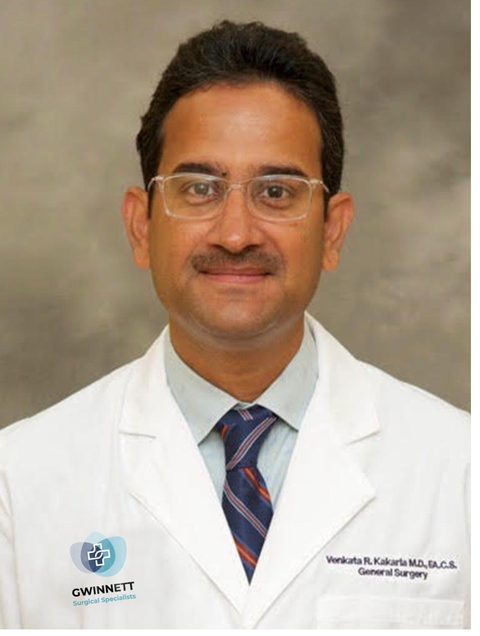
Dr. Kakarla performs robotic colon and rectal surgery for cancer, complex diverticulitis, large polyps, and other colorectal conditions. Using the da Vinci robotic platform, the diseased segment of colon or rectum is removed and the bowel is reconnected entirely inside the abdomen (intracorporeal anastomosis) — a technique that can allow smaller extraction incisions, less bowel manipulation, and may support faster return of bowel function and lower risk of incisional hernia compared to traditional approaches.
Combined with an enhanced recovery (ERAS) protocol using multimodal non-narcotic pain management, many patients begin liquids early, regain bowel function within a few days, and go home in 2–4 days, depending on the extent of surgery and how recovery progresses.
Is Robotic Colon Surgery Right for Me?
You may be a candidate if:
- You have colon cancer or rectal cancer requiring surgical resection
- You have recurrent diverticulitis, diverticular abscess, stricture, or fistula
- You have a large or complex polyp that cannot be safely removed during colonoscopy
- You have a colovesical or colovaginal fistula
- You are healthy enough for general anesthesia and abdominal surgery
A different plan may be needed if:
- There is diffuse metastatic disease requiring a non-surgical approach first
- The tumor is obstructing or perforated and surgery is urgent
- Severe prior abdominal scarring makes an open approach safer
- Emergency presentation requires a different surgical plan
Patients who present with perforation, uncontrolled bleeding, or complete bowel obstruction may need a more urgent surgical plan than the elective pathway described on this page. Dr. Kakarla evaluates each case individually.
Diagnosed with a Colorectal Condition? Here’s What Happens Next
Call us directly
No referral needed unless your insurance requires one. You do not need additional testing before your visit. Same-day and next-day appointments available. Interpretation services available for all languages at our office and the hospital.
Thorough evaluation
Dr. Kakarla reviews your colonoscopy, biopsy, and imaging results. If these were done outside the Northside system or you are seeking a second opinion, please bring your reports with you. He explains your surgical options and develops a treatment plan.
Coordinated care
For cancer patients, Dr. Kakarla works closely with medical oncologists and radiation oncologists to coordinate treatment. If chemotherapy or radiation is needed before surgery, that is arranged as part of your plan.
What we treat
Conditions Treated with Robotic Colon & Rectal Surgery
Cancer
- Colon cancer — robotic resection with oncologic principles: adequate margins, proper lymph node harvest, and complete mesocolic excision
- Rectal cancer — robotic low anterior resection (LAR) with total mesorectal excision (TME). Neoadjuvant chemotherapy and/or radiation may be recommended before surgery, coordinated with your oncology team
- Large or complex polyps — polyps that cannot be safely removed during colonoscopy, including malignant polyps requiring formal oncologic resection
Benign Conditions
- Complex diverticulitis — recurrent attacks, abscess, stricture, or fistula formation. Surgery removes the diseased segment to prevent future episodes
- Colovesical fistula — an abnormal connection between the colon and bladder, usually caused by diverticulitis. Causes recurrent urinary infections, air in the urine, or stool-like material in the urine
- Colovaginal fistula — an abnormal connection between the colon and vagina, also commonly caused by diverticulitis
When to seek urgent care
Call our office first if you are experiencing worsening symptoms, new bleeding, or increasing pain — we can often evaluate you quickly and guide you on next steps. If you have severe abdominal pain, heavy rectal bleeding, signs of bowel obstruction (vomiting, inability to pass gas or stool, distended abdomen), or high fever, go to the emergency room or call 911.
Before surgery
Pre-Surgical Workup
A thorough evaluation is essential for planning the best surgical approach. The workup typically includes:
- Colonoscopy with tattooing — identifies the exact location and extent of the disease. For tumors and polyps, the area is tattooed (marked with ink) during colonoscopy so the surgeon can precisely locate it during surgery. This is usually performed by your gastroenterologist before referral
- Biopsy and pathology review — confirms whether a polyp or mass is benign, pre-cancerous, or malignant, and guides the extent of surgery needed
- CT scan of the chest, abdomen, and pelvis — for cancer staging: evaluates the primary tumor, lymph nodes, and checks for any spread to the liver or lungs
- MRI of the pelvis — for rectal cancer specifically, provides detailed imaging of the tumor’s relationship to surrounding structures
- Blood work — including CEA (a tumor marker for colorectal cancer) and standard preoperative labs
Coming for a second opinion? Please bring your colonoscopy report, biopsy results, and imaging studies (or have them sent to our office). If your workup was done outside the Northside Hospital system, we need the actual reports and images to review.
Oncology Coordination
For cancer patients, Dr. Kakarla works closely with medical oncologists and radiation oncologists. For rectal cancer, neoadjuvant chemotherapy and/or radiation may be recommended before surgery to shrink the tumor and improve outcomes. This is coordinated as part of your treatment plan. Multidisciplinary tumor board review may be used for complex cases to ensure the best treatment strategy. For patients with a family history of colorectal cancer or early-onset disease, genetic counseling and screening for conditions such as Lynch syndrome may be recommended by the oncology team as part of your care.
The procedure
Robotic Colon Resection with Intracorporeal Anastomosis
The surgical plan is discussed and decided together with you based on the location, type, and stage of your condition:
Types of Resection
The specific operation depends on where the disease is located:
- Right hemicolectomy — removal of the right (ascending) colon. Common for right-sided colon cancer and complex polyps
- Left hemicolectomy / sigmoidectomy — removal of the left (descending) colon or sigmoid colon. Common for left-sided cancer, diverticulitis, and sigmoid fistulas
- Low anterior resection (LAR) — removal of the upper rectum and sigmoid with reconnection to the remaining rectum. Used for rectal cancer. Pelvic surgery near the rectum can affect nerves involved in bladder and sexual function; robotic precision may help nerve preservation, but the risk depends on tumor location and the extent of surgery
- Total / subtotal colectomy — removal of most or all of the colon, reserved for specific conditions
Will I Need a Colostomy?
The vast majority of patients do not need a colostomy. The bowel is reconnected during the same operation. In rare cases — typically very low rectal cancers or situations where the connection needs additional protection — a temporary diverting colostomy or ileostomy may be necessary. The chance of needing a temporary stoma is higher in very low rectal surgery, emergency situations, severe inflammation, or when the bowel connection needs extra protection while it heals. In selected cases, robotic visualization and intracorporeal techniques may help support primary reconnection. When a temporary stoma is needed, it is usually reversible in 6 weeks to 3 months.
What Surgery May and May Not Fix
Surgery is intended to remove the diseased segment of bowel and treat the underlying colorectal problem. It can be very effective, but it may not eliminate every digestive symptom such as bloating, irregular bowel habits, pelvic discomfort, or functional bowel symptoms unrelated to the segment being removed. Dr. Kakarla discusses realistic expectations with you before surgery.
The robotic advantage
Why Robotic Colon & Rectal Surgery?
- Intracorporeal anastomosis — the bowel is reconnected entirely inside the abdomen. Published studies suggest this approach may be associated with fewer conversions to open surgery, faster bowel recovery, shorter hospital stay, and lower extraction-site hernia risk in appropriately selected patients
- 3D magnified visualization — critical for identifying blood vessels, nerves, ureters, and tumor margins in the deep pelvis
- Wristed instruments — enable precise dissection and suturing in the narrow pelvic space, especially important for rectal cancer and total mesorectal excision
- Smaller Pfannenstiel extraction incision — the specimen is removed through a low bikini-line incision rather than a midline incision, reducing hernia risk (8–12% for midline vs significantly lower for Pfannenstiel)
- Less bowel manipulation — the intracorporeal technique avoids pulling the intestine out of the abdomen, reducing inflammation, ileus, and recovery time
- Precise oncologic dissection — improved visualization may support adherence to oncologic principles, especially in technically difficult pelvic surgery
- Tremor filtration — filters natural hand tremor for sub-millimeter precision near critical structures
Your surgeon
Why Dr. Kakarla?
- 2,500+ robotic procedures — among the highest volume in the region, well beyond the learning curve where outcomes plateau
- Surgical experience across three continents — this international breadth has refined Dr. Kakarla’s approach, allowing him to draw on a wider range of techniques than surgeons trained in a single system
- Intracorporeal anastomosis technique — the bowel is reconnected entirely inside the abdomen, a more advanced technique that not all surgeons perform
- Strong oncology team support — close coordination with medical oncologists and radiation oncologists for comprehensive cancer care
- Fellowship-trained in minimally invasive and robotic surgery at the University of Illinois at Chicago
- Board certified by the American Board of Surgery
- Port placement for chemotherapy — Dr. Kakarla places chemo ports when needed, streamlining your cancer treatment
Your surgical location
Where Your Surgery Happens
All robotic colon and rectal surgeries are performed at Northside Hospital Gwinnett with a 2–4 day hospital stay.
Surgery & hospital stay
Northside Hospital Gwinnett
1000 Medical Center Blvd
Lawrenceville, GA 30046
Consultation & follow-up
Gwinnett Robotic & Hernia Surgery
631 Professional Drive, Suite 300
Lawrenceville, GA 30046
Phone: (770) 962-9977
Ready to schedule a consultation? Same-day and next-day appointments available.
Before your procedure
Preparing for Surgery
You will receive a phone call from the hospital 1–2 days before your procedure with your specific arrival time and final instructions.
Bowel Preparation
Cleaning out the colon before surgery reduces the risk of infection. The prep begins 3 days before surgery with a low-fiber diet, followed by clear liquids only the day before, a bowel cleanout solution (Miralax mixed with Gatorade), and oral antibiotics at specific times. Detailed written bowel preparation instructions with specific timing and medications are provided by our office when surgery is scheduled.
Optimizing Your Health
- Stop smoking — at least 2–4 weeks before surgery. Smoking impairs wound healing, increases infection risk, and slows bowel recovery
- Stay active — patients who are physically active before surgery recover faster
- Eat a high-protein diet — protein is essential for tissue repair and healing. This is especially important for cancer patients who may have lost weight
Medications
- Blood thinners and antiplatelet medications: If you take any blood-thinning or antiplatelet medication, you will receive specific stop and restart instructions from our office. Common medications and typical guidance:
- Warfarin (Coumadin) — typically stopped 5 days before surgery; INR checked the day before. Bridging with injectable blood thinner may be needed for high-risk patients — confirm the plan with your cardiologist
- Eliquis (apixaban), Xarelto (rivaroxaban), Pradaxa (dabigatran), Savaysa — typically stopped 1–3 days before surgery depending on kidney function and bleeding risk. No bridging needed
- Plavix (clopidogrel) — stopped 5–7 days before; Brilinta (ticagrelor) — stopped 3–5 days before; Effient (prasugrel) — stopped 7 days before
- Aspirin — may be continued or stopped depending on why you take it. If prescribed for a prior heart attack, stent, or stroke, it may be continued. If taken for general prevention only, it is usually stopped 5–7 days before
- Diabetes medications: Speak with your endocrinologist or internist about dosing adjustments for the prep day and surgery day
- GLP-1 medications (Ozempic, Wegovy, Mounjaro, etc.): Current hospital protocol requires stopping one week before surgery and a liquid-only diet the day before. Inform our office when scheduling
- No need to shave the surgical area
What to Bring
Bring with you
- Photo ID and insurance card
- List of current medications
- Overnight essentials (2–4 night stay)
- Phone and charger
- Loose, comfortable clothing for discharge
Plan for
- Someone to drive you home at discharge
- Help at home for the first few days
- 2–3 weeks off work (desk); 4–6 weeks (physical labor)
- Work paperwork — let the office know if you need FMLA or disability forms
The day of your procedure
What Happens on Surgery Day
After your surgery
Recovery Timeline
What Is Normal After Surgery
- Irregular bowel habits — looser or more frequent stools are common for several weeks as the remaining bowel adapts. This usually normalizes over 1–3 months
- Fatigue — expected for 2–4 weeks. Major surgery requires significant energy to heal. Naps are normal
- Mild abdominal soreness — at incision sites and internally as tissue heals
- Decreased appetite initially — eat small, frequent meals. Appetite gradually returns
- Temporary gas and bloating — walking helps. Improves as bowel function normalizes
When to call after surgery
Call our office first for: fever over 101.5°F · worsening abdominal pain · persistent vomiting · no bowel function by day 4–5 · increasing redness or drainage from incisions · rectal bleeding more than a small amount · inability to keep fluids down. We can often evaluate you quickly and advise on next steps.
Call 911 for: severe abdominal pain with distension · chest pain or difficulty breathing · fainting · heavy rectal bleeding.
For routine questions, call (770) 962-9977 during office hours.
Common Activity Questions
- Driving — when off narcotic pain medication and comfortable (typically week 2–3)
- Desk work — most return within 2–3 weeks
- Physical labor — 4–6 weeks with gradual return
- Lifting — nothing over 10 lbs for 4 weeks
- Exercise — walking from day 1 in hospital; gym/weights after 4 weeks
- Sexual activity — when comfortable and off prescription pain medication
- Showering — brief shower when incisions are sealed; no baths/pools until fully healed
Enhanced Recovery (ERAS) Protocol
Dr. Kakarla uses an enhanced recovery protocol: multimodal non-narcotic pain management (TAP block, scheduled acetaminophen and ibuprofen), early feeding (full liquids on postoperative day 1, advancing as tolerated), and early mobilization (walking the same day as surgery). This evidence-based approach helps patients recover faster with less opioid use. Enhanced recovery protocols improve the experience significantly, but this is still major abdominal surgery — fatigue, soreness, and temporary bowel changes are expected and normal.
Understanding the risks
Possible Risks and Complications
Robotic colon and rectal surgery is well-studied and generally safe, but as with any major abdominal operation, complications can occur:
- Anastomotic leak — the most serious specific risk. The reconnection site may develop a small leak, which can cause infection and may require additional treatment (antibiotics, drainage, or rarely reoperation). Risk is generally 2–5% and depends on the location of the anastomosis
- Ileus (slow return of bowel function) — the bowel may be slow to resume normal activity after surgery. Usually resolves with time, walking, and supportive care
- Bleeding — uncommon; usually minor
- Infection — surgical site infection or intra-abdominal abscess. Bowel preparation and minimally invasive technique reduce this risk
- Bowel obstruction — from adhesions (scar tissue). Can occur weeks to years after any abdominal surgery
- Temporary or permanent stoma — rare; see colostomy section above
- Urinary and sexual function changes — possible with rectal surgery due to proximity of pelvic nerves. Robotic precision helps preserve these nerves
- Blood clots — early walking and compression devices reduce risk
- Conversion to open surgery — uncommon with robotic technique
- Anesthesia risks — discussed with your anesthesiologist
Dr. Kakarla discusses your individual risk profile during consultation. Your specific risks, benefits, and alternatives are reviewed before you consent to surgery.
This information is general and may not apply to every patient. Your own risks, benefits, and recovery plan will be discussed with you in person before surgery.
Practical details
Colon Surgery Cost and Insurance
- Medicare and Medicaid — typically covered, subject to your plan rules and patient responsibility (deductible, copay, coinsurance)
- Commercial insurance — Aetna, Anthem/BCBS, Cigna, Humana, UnitedHealthcare, Tricare, and most major plans
- We verify your benefits before scheduling — you know your out-of-pocket cost upfront
- No referral needed unless your specific insurance plan requires one
Common questions
Frequently Asked Questions
Will I need a colostomy bag?
The vast majority of patients do not need a colostomy. The bowel is reconnected during surgery. In rare cases, a temporary diverting stoma may be necessary to protect the connection, particularly for very low rectal cancer surgery, emergency situations, or severe inflammation. When needed, it is usually reversible in 6 weeks to 3 months. In selected cases, robotic visualization and intracorporeal techniques may help support primary reconnection.
What is intracorporeal anastomosis and why does it matter?
In traditional minimally invasive colon surgery, the intestine is pulled out through an incision to be reconnected outside the body. With intracorporeal anastomosis, the reconnection is done entirely inside the abdomen using the robotic instruments. This means less bowel manipulation, a smaller extraction incision (placed in the bikini line rather than the midline), faster return of bowel function, and a lower risk of incisional hernia.
How will my bowel habits change after surgery?
Looser or more frequent stools are common for several weeks as the remaining bowel adapts. Most patients find their bowel habits normalize over 1–3 months. The extent of change depends on how much colon was removed and where the resection was performed.
What if the pathology shows cancer? What happens next?
The pathology report provides the final staging of the cancer, including depth of invasion, lymph node involvement, and margins. This determines whether additional treatment (such as chemotherapy) is recommended. Dr. Kakarla reviews the results with you and coordinates with your medical oncologist to develop a follow-up plan, including surveillance colonoscopy scheduling.
Why do I need bowel preparation before surgery?
Cleaning out the colon before surgery reduces the risk of surgical site infection. The preparation involves a low-fiber diet for 3 days, clear liquids the day before, oral antibiotics, and a bowel cleanout solution. Detailed written instructions with specific timing are provided when surgery is scheduled.
What happens at my first appointment?
Dr. Kakarla reviews your colonoscopy report, biopsy results, and imaging. He examines you, explains your condition, and discusses surgical options. For cancer patients, he outlines the treatment plan including any needed chemotherapy or radiation before surgery. The visit typically takes 30–45 minutes. You are welcome to bring a family member.
Will I be asleep during surgery?
Yes. The procedure is performed under general anesthesia. A board-certified anesthesiologist monitors you throughout. A TAP block provides long-lasting pain relief as part of the enhanced recovery protocol.
How much pain should I expect?
The enhanced recovery protocol emphasizes non-narcotic pain management. Most patients describe moderate soreness that improves daily. The TAP block and scheduled acetaminophen and ibuprofen control most pain. Narcotics are available but many patients use them minimally or not at all after the first day or two.
Do I need to shave before surgery?
No. The surgical team handles any necessary hair removal.
Will I have stitches to remove?
Port site incisions are closed with Dermabond (medical skin adhesive) that sloughs off naturally. The Pfannenstiel extraction incision may have absorbable sutures or Dermabond depending on the case.
When can I shower after surgery?
You can shower when incisions are sealed and you are comfortable. Your surgical team will provide specific guidance before discharge. No baths or pools until fully healed.
What is the difference between colon surgery and rectal surgery?
The colon (large intestine) and rectum are different parts of the digestive tract. Colon surgery removes a segment of the large intestine and is performed for colon cancer, diverticulitis, and large polyps. Rectal surgery operates in the pelvis, which is a narrower and more technically demanding space, and is performed for rectal cancer. Rectal surgery may carry additional considerations including effects on bowel, bladder, and sexual function due to the proximity of pelvic nerves. Dr. Kakarla performs both robotically.
When is a temporary ileostomy or colostomy needed?
A temporary stoma is more likely in very low rectal cancer surgery, emergency operations, cases with severe inflammation, or when the bowel connection needs extra protection while it heals. When needed, the stoma is usually reversed in 6 weeks to 3 months after confirming the connection has healed. The vast majority of patients do not need a stoma at all.
Can I get a second opinion?
Absolutely. If you have been diagnosed elsewhere and want another perspective, bring your colonoscopy report, biopsy results, and imaging studies. Dr. Kakarla reviews everything and provides an independent assessment and treatment plan.
Do I need a referral or to see my PCP first?
No. You can call our office directly. You do not need to see your primary care doctor first — unless your specific insurance plan requires a referral.
Questions to bring to your consultation
- What stage is my cancer, and has it spread?
- Will I need chemotherapy or radiation before or after surgery?
- How much of my colon will be removed?
- Will I need a colostomy bag?
- What are the chances of the cancer coming back?
- How long will I be in the hospital?
- When can I return to my specific job?
- What follow-up and surveillance will I need?